

.png)
Enerji Verimliliği
Katı Atık Transfer İstasyonları
Şehir içinden toplanan atıkların, depolama sahalarına en ekonomik şekilde taşınmasını sağlayan yüksek performanslı sistemlerdir.
.webp)
Yer Tasarrufu
Yatay balya presinde sıkıştırılmış balyalar sayesinde hem üretim sahalarında hem de depolama alanlarında yer tasarrufu sağlanır, alan kullanımı optimize edilir.
.webp)
Zaman Tasarrufu
Yatay balya pres makinesi, büyük miktarda atığı hızlı bir şekilde sıkıştırarak geri dönüşüm ve atık yönetim süreçlerini hızlandırır, operasyonel süreleri kısaltır.
.webp)
Geniş Uygulama Alanı
Balya pres makinesi kağıt, karton ve naylon atıklarının olduğu tüm geri dönüşüm tesisleri, sanayi ve perakende sektörlerinde kullanılır.
.webp)
Düşük Bakım Maliyeti
Yatay balya pres makinesinin dayanıklı yapısı sayesinde minimum bakım gerektirir.
Sürdürülebilirlik
Yatay balya presi, geri dönüşüm oranını artırarak çevresel etkiyi azaltır.
.webp)
Otomatik ve Manuel Seçenekler
Tam otomatik yatay balya pres makinesi ile işçilik maliyetleri düşürülür, manuel modeller ise küçük işletmelere ekonomik çözümler sunar.
.webp)
Depolama ve Nakliye Tasarrufu
Yatay balya pres makinesi ile sıkıştırılmış balyalar sayesinde depolama ve nakliye maliyetleri azaltılır.
.webp)
Çeşitli Atık Türlerine Uygun
Karton pres makinesi, hurda kağıt pres makinası, naylon pres makinası gibi farklı materyalleri işleyebilir.
High Pressure Capacity
Horizontal baling presses compress paper, plastic, metal, and textile waste with a pressure force between 6 and 200 tons.

Solid Waste Transfer Stations: Logistical Efficiency and MT Machinery Solutions in Waste Management
One of the biggest challenges of modern urbanism is waste collection and disposal processes, which, if not managed with the right strategies, can lead to both high costs and environmental problems. This is where solid waste transfer stations come into play, saving lives as strategic intermediate facilities where household waste collected from city centers is processed before being transported to disposal sites.
So, how does this most critical link in the waste management chain work, and what advantages does it offer businesses?
What is a Solid Waste Transfer Station and How Does it Work?
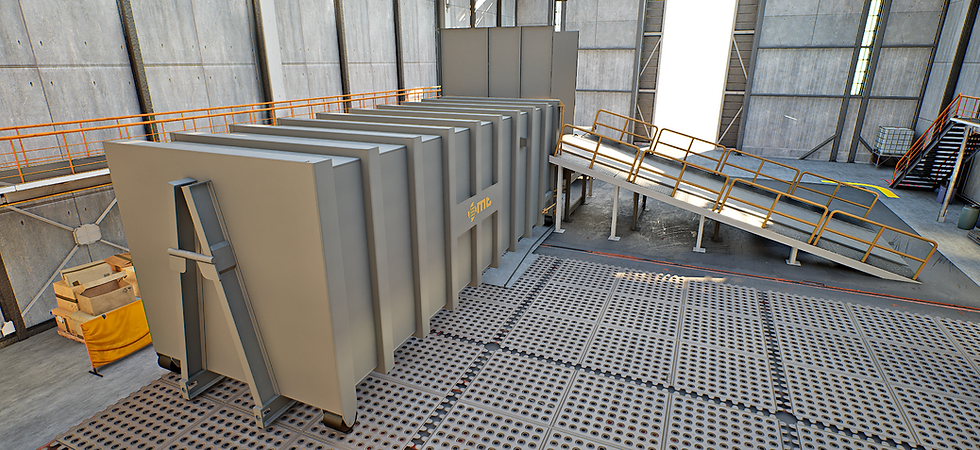
Solid waste transfer stations are centers where waste brought by small-capacity garbage trucks operating in neighborhoods and narrow streets is transferred to larger-capacity transport vehicles (trucks or trailers).
The basic operational steps applied in these facilities are as follows:
-
Small garbage trucks unload the collected waste into special feed hoppers at the station.
-
Waste materials are compressed under high pressure using specialized systems and static compactors.
-
Waste materials that have been reduced in volume are transferred to large trucks or containers suitable for long-distance transport.
Maximum savings in logistics costs.
The biggest advantage these systems offer to municipalities and private waste management companies is undoubtedly the significant savings they provide in logistics operations.
-
Fuel and Depreciation Savings: Small collection vehicles are spared from having to travel miles to landfills each time. This minimizes vehicle wear and tear and significantly reduces fuel consumption.
-
Uninterrupted Service: Garbage trucks can quickly unload their cargo at the nearest transfer station and immediately return to their duty areas. This ensures that city cleaning services continue uninterrupted and on time.
-
Reduced Traffic Burden: By preventing a large number of small vehicles from entering highway traffic, long-distance transportation is carried out by a smaller number of larger-volume vehicles.
High-tech solutions with the MT Makina signature.
At MT Makina, we offer advanced solid waste transfer station solutions required by modern waste management. Our facilities are designed with high performance and long lifespan in mind.
Superior Compression and Sealing Technology
Thanks to the powerful hydraulic compression technology used in our projects, waste is compressed to the maximum extent, reducing its volume. This maximizes the amount of waste transported in a single shipment. Furthermore, our superior sealing systems;
-
It prevents unpleasant odors from developing in the surrounding area.
-
It prevents water leakage, providing a hygienic working environment.
-
It safeguards the environment and public health.
Robust and Automated Systems
Our facilities, constructed with durable steel structures resistant to harsh working conditions, provide years of trouble-free service. Automated control systems simplify facility management, saving you manpower and time.
Solid Waste Management for a Sustainable Environment and Future
Solid waste transfer stations, an indispensable part of a sustainable environmental management vision, are not just transfer points but also an ecological solution. Reducing transportation trips directly leads to a decrease in carbon footprint (emissions).
If you want to build a profitable, efficient, and environmentally friendly waste management process for municipalities and waste management facilities, you can choose transfer stations equipped with MT Makina's expert engineering solutions. Protect both your budget and the environment with optimized waste management.
.png)
Solid Waste Transfer Station and Logistics Management Solutions
Increasing population density and rapid urbanization are making waste management increasingly complex for local governments and businesses. Transporting collected waste directly to remote dumping sites is one of the biggest sources of wasted time and resources. The most modern way to overcome this logistical bottleneck and achieve integrated waste management goals is to establish solid waste transfer stations.
What is a Waste Transfer Station and What Benefits Does it Offer Businesses?
Waste transfer stations are transit points where small-volume garbage trucks collecting waste from residential areas and narrow streets transfer their load directly to larger-capacity long-haul vehicles (trailers, etc.).
Integrating these facilities into the waste collection chain provides the following operational benefits:
-
Maximum Vehicle Efficiency: Instead of going to disposal sites outside the city, collection vehicles drop off waste at the nearest station. This allows vehicles to return to their duty area without delay, providing uninterrupted cleaning services.
-
Reduced Depreciation and Fuel Costs: Hundreds of small vehicles are prevented from making long journeys. The decrease in the number of road trips drastically reduces fuel costs, while significantly lowering vehicle maintenance and repair costs (depreciation).
-
Traffic and Emission Reduction: The burden of intra-city and intercity traffic is eased. Transporting more waste with fewer vehicles reduces the carbon footprint of the operation, directly contributing to the vision of environmentally friendly municipal management.
Advanced Compression and Sealing with MT Makina Quality
At MT Makina, we design transfer stations that comply with international standards for the management of both domestic and industrial waste. The engineering marvels at the heart of our facilities ensure your operations run smoothly:
-
High-Power Static Compactors: Our advanced hydraulic systems compress spilled waste with immense force. The waste is reduced in volume under high pressure, maximizing the capacity a single trailer can carry.
-
Complete Leakproof Guarantee: Leaking water and unpleasant odors, one of the biggest problems during waste transfer, are completely prevented thanks to MT Makina's specially designed leakproof solutions. This facilitates compliance with environmental regulations and creates a hygienic environment for employees.
-
High Strength: Built with durable steel construction, our systems withstand intense 24/7 operation and heavy loads for many years.
Return on Investment (ROI) of Solid Waste Transfer Stations
One of the most frequently asked questions when starting a waste management project is about investment costs. The prices of solid waste transfer stations are determined based on factors such as the targeted daily waste processing capacity, the number of static compactors to be installed on-site, the level of automation, and the hydraulic technologies used. However, the main focus should be on the rapid payback period provided by the system. Thanks to the enormous savings in fuel, labor, vehicle maintenance, and time, the budget spent on installation begins to pay for itself as profit in a very short time.
To develop a long-term, efficient, and profitable waste management strategy, you can contact MT Makina's expert team and benefit from their project planning services tailored to your city and business.
.png)
Engineering Solution for Waste Management in Metropolitan Areas: Solid Waste Transfer Stations
In modern cities with rapidly growing populations and expanding boundaries, solid waste management is no longer simply about collecting garbage from the streets. This enormous mass of collected waste needs to be transported to regulated landfills and disposal sites using the most economical, fastest, and most environmentally friendly methods. At the heart of this complex logistical process are solid waste transfer stations that offer high efficiency.
What is a Waste Transfer Station and How Does it Relieve Traffic Congestion?
Waste transfer stations are modern transfer centers where small-volume garbage trucks that circulate among neighborhoods transfer the collected waste to high-tonnage and long-haul transport vehicles such as semi-trailers.
The unique benefits this system offers to urban life and waste management companies are as follows:
-
End to Traffic Congestion: With the number of small garbage trucks decreasing on highways, there will be a noticeable relief in city traffic.
-
Fast and Safe Transfer: The transportation of waste to landfills is carried out in a much more planned and safe manner using heavy vehicles.
-
Extended Vehicle Lifespan: Since city-based collection vehicles don't travel long distances, wear and tear (depreciation) is significantly reduced, and maintenance and repair costs are minimized.
Huge savings of up to 40% on transportation costs.
Waste transfer centers, specially designed by MT Makina, are equipped with technologies that significantly reduce operational costs. The facility's operation is directly focused on cost savings. Collection vehicles unload their cargo into special feeding hoppers at the station. At this point, powerful static compactors come into play, applying enormous pressing force to compress the waste under high pressure and fill it into large containers. Thanks to the dramatically reduced volume of the waste, the load capacity transported in a single trip is maximized. This technology, which directly reduces the number of trips on the road, offers businesses the opportunity to save up to 40% on waste transportation costs.
MT Machinery Quality: Steel Construction and Flawless Sealing.
Waste transfer centers, operating continuously under heavy loads and challenging conditions, require superior engineering. At MT Makina, we construct our systems with durable steel structures and advanced hydraulic compaction technologies that will provide years of trouble-free service. The technology used in our facilities not only provides an economic logistical advantage but also completely eliminates environmental and public health risks.
-
Closed System Design: The operation process takes place entirely within closed systems, cutting off contact with the external environment.
-
Enhanced Sealing: Thanks to special sealing technology at the connection points, the mixing of wastewater (leachate) with the soil and groundwater is completely prevented.
-
Odor and Hygiene Control: The spread of unpleasant odors that may be caused by household waste is stopped. This creates a safe and hygienic working environment for the staff and prevents discomfort to the surrounding community.
Customized Project Planning and Sustainable Investment
Every city and business has a different waste dynamic. Therefore, a standard package is not possible for the installation of a solid waste transfer station. At MT Makina, we create customized engineering plans based on the topographical structure of the land where the facility will be built, the daily waste tonnage of the region, and logistical goals. These high-performance and energy-efficient systems, designed for municipalities and private waste management companies, reduce carbon footprint and support sustainable environmental policies. These investments, indispensable for modern urban planning, pay for themselves quickly and become the key to operational excellence.
Reduce Logistics and Transportation Costs with Solid Waste Transfer Stations
Transfer Station Performance and Efficiency Solutions

Max. Compression Strength
Thanks to powerful hydraulic cylinders, it compresses waste under high pressure, reducing its volume and increasing the amount of waste that can be transported in a single trip.
.png)
Fuel and Time Savings
By eliminating the need for garbage collection vehicles to travel to the landfill, it reduces the number of trips and provides significant fuel savings.
.png)
Leakproofing and Hygiene
Its closed-system design and special sealing structure prevent leakage and unpleasant odors, providing an environmentally friendly work environment.
Long-lasting structure.
With its heavy-duty steel construction and wear-resistant materials, it operates reliably for years in challenging field conditions.
.png)
The dynamic nature of modern cities has transformed waste management from a simple "transportation" task into a complex engineering and data management process. Today's solid waste transfer stations have become smart facilities equipped with sensors, fully compliant with environmental protocols, and integrated with the urban fabric. Beyond financial statements, the technological architecture and ecological contributions of these facilities define the vision of modern municipal governance.
IoT and Automation: Smart Transfer Centers
Applying Industry 4.0 principles to waste management maximizes efficiency while minimizing operational errors. The technological features that stand out in the systems developed by MT Makina are as follows:
-
Remote Monitoring and Diagnostics: The fill levels, hydraulic pressure values, and energy consumption of static compactors are monitored in real-time via cloud-based systems. This allows for logistics planning before containers are fully loaded, preventing unnecessary shipments.
-
Smart Sensor Technology: Sensors placed in the waste feed hoppers detect the type and density of the waste, automatically adjusting the compression force. This prevents unnecessary stress on mechanical parts and extends the system's lifespan.
-
Error Prevention Systems (Poka-Yoke): Locking mechanisms and emergency stop protocols that minimize operator errors maximize workplace safety.
Ecological Engineering that Reduces Carbon Footprint
For a sustainable future, transfer stations should be designed as "green logistics" centers. These facilities contribute to environmental sustainability in two key areas:
Emission Management
Optimizing the distance traveled by garbage collection vehicles in urban traffic directly translates to a reduction in exhaust emissions. Having a single large transport vehicle take on the work of more than 10 smaller trucks significantly reduces nitrogen oxide and carbon dioxide levels in the city atmosphere.
Leakage and Odor Neutralization
Leachate generated during the transfer of domestic waste poses a significant threat to groundwater resources. In transfer centers designed by MT Makina engineering:
-
Closed-Loop Drainage: Wastewater is collected in special collection tanks and safely discharged into sewer or treatment systems.
-
Negative Pressure and Filtration: In enclosed facility designs, negative pressure systems and activated carbon filters completely prevent unpleasant odors from escaping the facility.
Materials Science and Strength: Heavy-Duty Design
The sustainability of a transfer station also depends on the durability of the materials used. The corrosive nature of waste causes standard metals to deform rapidly.
At MT Makina, our solutions include:
-
Wear Plates: High-strength, wear-resistant special alloy steels (Hardox, etc.) are used on the surfaces of static compactors that come into contact with the waste.
-
Corrosion Resistance: Special painting and coating techniques resistant to chemical interactions protect the structural integrity of the plant for decades.
Integrated Waste Management and Urban Planning
Solid waste transfer stations are the "hidden heroes" of cities. A properly located and technologically advanced station is an integral part of urban transformation and planning processes. These modern structures, capable of operating with a "zero complaint" principle even in areas close to residential zones, enable the management of waste's journey from source to disposal with digital traceability. A technology-focused transfer station is not just a point where waste moves; it's a strategic node where data is processed, the environment is protected, and the quality of urban life is improved. MT Makina leads the way to clean cities of the future by constructing these node points with the most advanced engineering standards.
Digital Transformation in Waste Management: Technology and Environment-Focused Transfer Stations
.png)
Katı Atık Transfer İstasyonu S.S.S.
Solid Waste Transfer Station
Technical Specifications
Standard Technical Specifications
-
Body Structure: The main body and all surfaces in contact with waste are manufactured from high-strength ST-52 or special wear-resistant sheet metal.
-
Hydraulic System: Integrated hydraulic unit including variable flow high-pressure pumps, suction and return filters, and oil level and temperature indicators.
-
Compression Force: High pressing force ranging from 40 tons to 100 tons depending on the model.
-
Automation and Control: Fully automated operation cycle managed via PLC control system, emergency stop buttons, and visual/audible warning systems.
-
Sealing System: Heavy-duty sealing gaskets and special drainage channels prevent wastewater from leaking out.
-
Surface Protection: Application of a topcoat industrial paint over a corrosion-resistant epoxy primer.
Solid Waste Transfer Station Models
-
WTS-L Series (Light Duty): These compact models, with a daily waste capacity of 50-150 tons, are designed primarily for small municipalities and medium-sized industrial facilities.
-
WTS-M Series (Medium Duty): These models offer a daily capacity of 150-400 tons and are the most frequently preferred model for urban transfer points, featuring a high-speed cycle.
-
WTS-H Series (Heavy Duty): These industrial models, developed for massive waste volumes of 400 tons and above per day, feature a double-acting cylinder structure and an ultra-durable body.
Optional Features and Additional Equipment
-
Intelligent Weighing System: Integrated weighing systems located at the station entrance or compactor outlet that digitally record data.
-
IoT and Remote Monitoring: A cloud-based monitoring module that allows you to track machine operating hours, pressure values, and fill levels from mobile devices.
-
Odor Removal and Dust Suppression: Automatic spray (nozzle) systems that neutralize unpleasant odors and suppress dust generated during transfer.
-
Automatic Lubrication Unit: A central system that enables periodic lubrication of moving parts and rail systems without human intervention.
-
Oil Cooling/Heating System: Thermostatic control units that ensure the hydraulic oil remains at its ideal operating temperature in extremely hot or extremely cold climates.
-
Container Shifting and Locking: Hydraulically driven container shifting platforms and automatic locking mechanisms that speed up trailer changes.
-
Wear Plates (Hardox): Replaceable Hardox wear plates used on bases and side walls for highly abrasive waste (construction waste, etc.).
.png)
Solid Waste Transfer Station Video
Maximize efficiency in waste logistics with solid waste transfer station systems. Discover MT Makina's robust static compactor technology and environmentally friendly transfer solutions in our videos. Watch our video now for leak-proof, high-capacity designs that reduce operating costs.


